

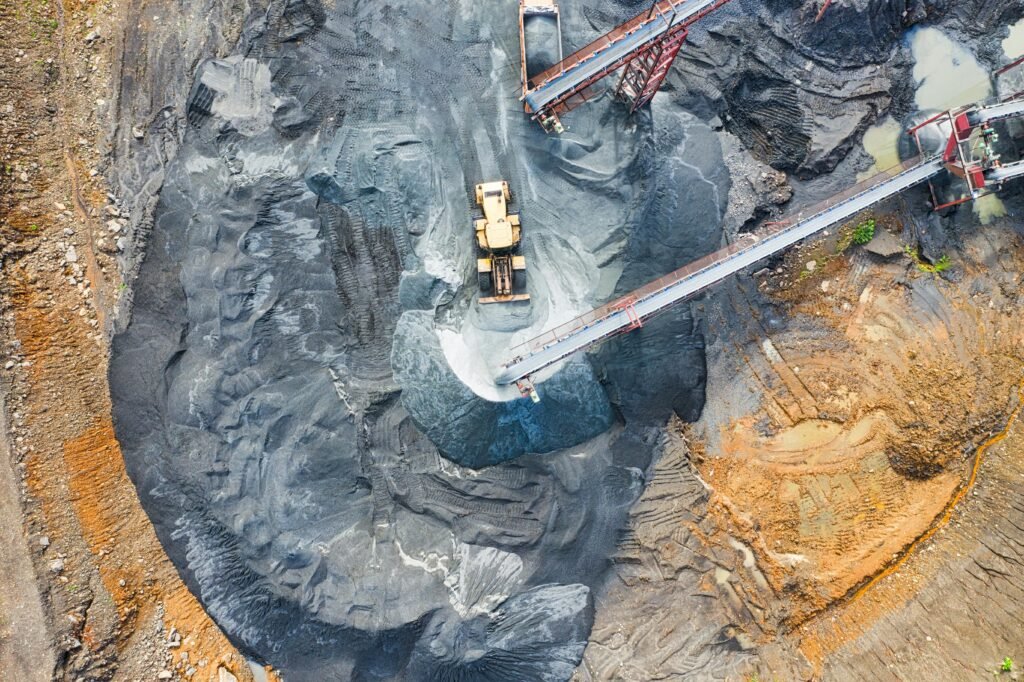
Mining Is More Than Digging: How Science and Data Shape Modern Mining
Mining is often perceived as a purely physical activity — heavy machinery, excavation, and material removal. In reality, modern mining is a highly scientific process built on data, technology, and strategic planning long before any rock is moved.
Today’s mining operations rely on a multidisciplinary approach that integrates surveying, mapping, and geotechnical analysis to ensure efficiency, safety, and sustainability.
Surveying: The Foundation of Every Mining Project
Every successful mining operation begins with accurate surveying. Survey data provides precise information on terrain, elevation, boundaries, and spatial positioning. These measurements form the backbone of mine planning, determining access routes, pit geometry, and operational limits.
Without reliable survey data, mining activities face higher risks of inefficiency, safety incidents, and costly errors.
Mapping: Turning Measurements into Decisions
Raw data alone has limited value until it is transformed into meaningful information. Through mapping and spatial analysis, survey data becomes a decision-making tool.
Geological maps, topographic maps, and operational layouts allow mining engineers to visualize site conditions, plan extraction sequences, and coordinate activities across departments. Accurate maps ensure that every operational decision is grounded in spatial reality.
Geotechnical Analysis: Managing Ground Behavior and Risk
Understanding the behavior of soil and rock is essential in mining. Geotechnical analysis evaluates slope stability, ground strength, and structural conditions to prevent failures and ensure worker safety.
In both open-pit and underground mining, geotechnical data guides slope design, support systems, and excavation methods. This scientific assessment reduces operational risk and supports long-term mine stability.
Technology and Data Integration in Modern Mining
Modern mining operations increasingly utilize advanced technologies such as drones, GIS, 3D modeling, and digital monitoring systems. These tools allow for continuous data collection, real-time analysis, and predictive planning.
By integrating multiple data sources, mining companies can optimize production, reduce waste, and improve operational efficiency while maintaining strict safety standards.
Science-Driven Mining for a Sustainable Future
Mining today is not only about resource extraction but also about responsible management. Scientific planning helps minimize environmental impact, supports regulatory compliance, and enables effective land rehabilitation after mine closure.
A data-driven approach ensures that mining activities balance economic value with environmental and social responsibility.
Conclusion
Mining is far more than digging into the ground. It is a complex, science-based industry where surveying, mapping, geotechnical analysis, and technology work together to shape safe, efficient, and sustainable operations.
In modern mining, data is as valuable as the resources being extracted.