

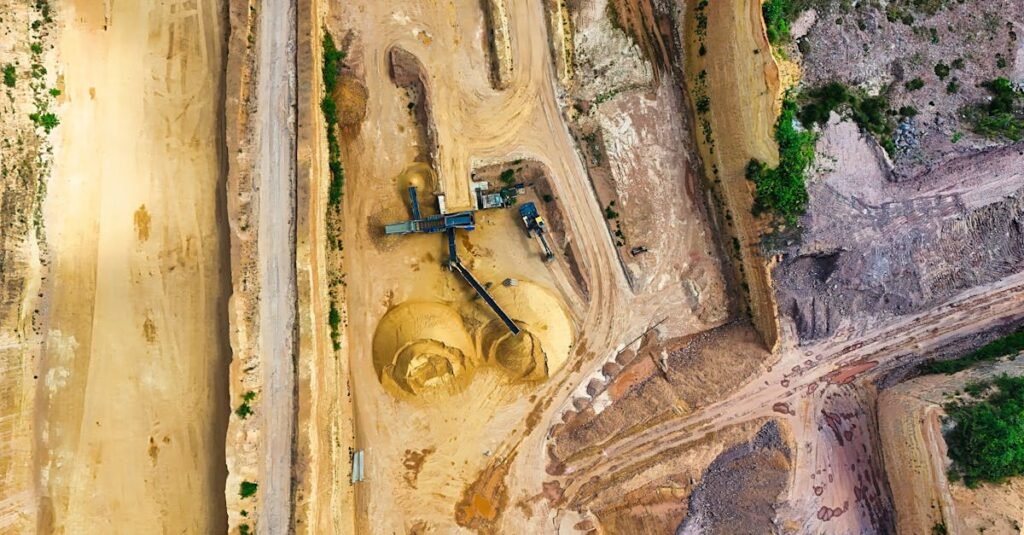
The mining industry utilizes different extraction methods depending on geological conditions, economic feasibility, environmental considerations, and safety factors. Among the most widely used techniques are open-pit mining and underground mining. Each method offers distinct advantages and operational challenges.
- Open-Pit Mining
Open-pit mining is a surface extraction method used when mineral deposits are located relatively close to the earth’s surface. This technique involves removing overburden (soil and rock covering the deposit) to create a large terraced excavation known as a pit.
Key Characteristics:
Bench system (stepped slopes)
Large-scale equipment such as haul trucks and hydraulic excavators
High production capacity
Lower cost per ton compared to underground mining
Advantages:
Economically efficient for large ore bodies
High productivity and mechanization
Easier access for equipment and monitoring
Challenges:
Significant surface disturbance
Visual and environmental impact
Land reclamation requirements after closure - Underground Mining
Underground mining is applied when mineral deposits are located deep beneath the surface. This method requires the construction of shafts, tunnels, and ventilation systems to safely extract ore.
Key Characteristics:
Access through vertical shafts or horizontal adits
Use of specialized loaders and drilling equipment
Complex ventilation and ground support systems
Advantages:
Minimal surface footprint
Reduced landscape alteration
Suitable for high-grade deep deposits
Challenges:
Higher operational cost
Increased safety risks
Complex engineering and ground control - Environmental and Safety Considerations
Both mining methods require strict compliance with environmental regulations and occupational safety standards. Key aspects include:
Waste rock and tailings management
Slope stability (open-pit)
Ventilation and gas monitoring (underground)
Progressive reclamation and post-mining land restoration
Modern mining operations increasingly adopt sustainable practices, digital monitoring systems, and environmental impact mitigation strategies to ensure long-term viability.
Conclusion
The choice between open-pit and underground mining depends on geological conditions, economic analysis, environmental impact assessments, and safety considerations. While open-pit mining offers cost efficiency and high production rates, underground mining provides reduced surface impact and access to deeper ore bodies.
A balanced evaluation of technical feasibility, environmental responsibility, and economic sustainability remains essential in modern mining project development.