

Mountains are among the most striking landforms on Earth. Their presence shapes climate, ecosystems, and even human civilization. But behind every mountain lies a long and complex geological story. Understanding how mountains form helps us appreciate the dynamic forces that continually reshape our planet.
This article explains the four major types of mountain formation: tectonic, volcanic, dome, and erosional mountains.
- Tectonic Mountains
Tectonic mountains are created when Earth’s lithospheric plates collide or push against each other. These collisions generate immense pressure, causing rock layers to fold and uplift. Over millions of years, these forces build some of the world’s highest and most dramatic mountain ranges.
One of the clearest examples is the Himalayan range, formed by the ongoing convergence between the Indian Plate and the Eurasian Plate. This process continues today, causing the Himalayas to rise a few millimeters each year. - Volcanic Mountains
Volcanic mountains are built through repeated eruptions of magma, ash, and volcanic debris. They commonly form along subduction zones, rift zones, and volcanic hotspots.
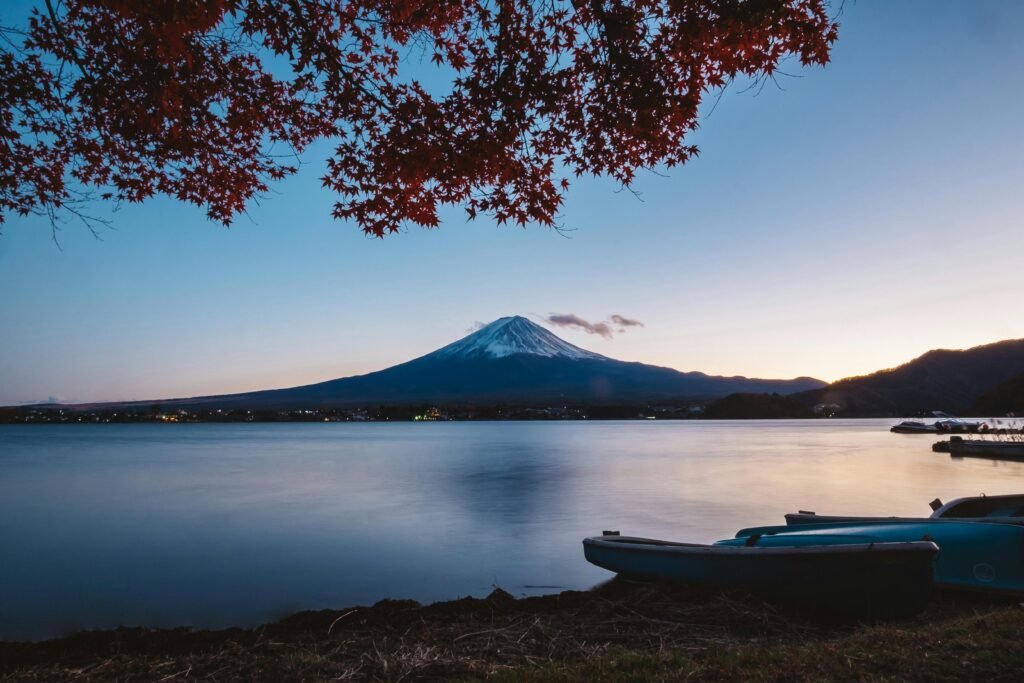
Mount Fuji in Japan is a classic stratovolcano formed through layered eruptions. In contrast, Mauna Loa in Hawaii is a shield volcano built by fluid lava spreading across broad areas. Volcanic mountain formation can be rapid on a geological timescale, with some edifices forming within thousands of years. - Dome Mountains
Dome mountains arise when magma pushes upward from beneath the crust but does not erupt onto the surface. Instead, the magma’s pressure uplifts the overlying rock, creating a rounded, dome-shaped structure.
Over time, erosion strips away upper layers, revealing the uplifted dome. The Black Hills in the United States are a well-known example of this type of formation. - Erosional Mountains
Erosional mountains are not formed by uplift alone but by the removal of softer surrounding rock. Wind, water, glaciers, and long-term weathering carve away weaker materials, leaving the most resistant rock standing as elevated landforms.
The Catskill Mountains in the United States illustrate how powerful erosion can be in shaping a mountain landscape.
Conclusion
Although mountains appear timeless, each one represents millions of years of geological activity. Tectonic forces push plates together, volcanic activity builds new land, subsurface magma uplifts rock domes, and erosion sculpts landscapes into rugged peaks. Each type of mountain formation highlights a different facet of Earth’s constant transformation.
Understanding these processes deepens our appreciation of the world’s landscapes and the powerful natural mechanisms that continue to shape them.