

Mineral processing is a critical stage in the mining value chain, transforming raw ore extracted from the earth into valuable metals used across global industries. The process involves several sequential steps designed to reduce particle size, separate mineral components, and purify the final product. Each stage plays a fundamental role in increasing efficiency and maximizing recovery.
This article outlines the essential stages of mineral processing: crushing, grinding, flotation, smelting, and refining. Together, these operations form an integrated system that enables the mining sector to deliver high-quality raw materials for manufacturing, construction, energy production, and advanced technologies.
- Crushing: Preparing the Ore for Further Processing
Crushing is the first step in mineral processing and serves as the initial size-reduction stage. In this phase, large blocks of ore are broken down using primary crushers such as jaw crushers, gyratory crushers, or cone crushers. The objective is to produce smaller, manageable fragments that can be efficiently handled in the grinding circuit.
Effective crushing improves downstream performance by enhancing mineral liberation and reducing energy consumption during grinding.
- Grinding: Achieving Fine Particle Size
Following crushing, the ore moves to the grinding stage, where it is reduced into much finer particles. Grinding is typically carried out using ball mills, SAG (semi-autogenous grinding) mills, or rod mills.
The purpose of grinding is to increase surface area and liberate the valuable minerals from the host rock. Successful liberation is essential for achieving high recovery rates during subsequent separation processes.
- Flotation: Separating Valuable Minerals
Flotation is a widely used mineral separation technique based on differences in surface chemistry. In this process, reagents such as collectors and frothers are added to create hydrophobic surfaces on specific minerals. Air bubbles introduced into the slurry attach to these particles, causing them to float to the surface, where they can be removed as froth.
Flotation enables efficient separation of valuable minerals such as copper, lead, zinc, and various sulfides from unwanted materials. It is a key stage in producing high-grade mineral concentrates.
- Smelting: Extracting Metal Through High-Temperature Processing
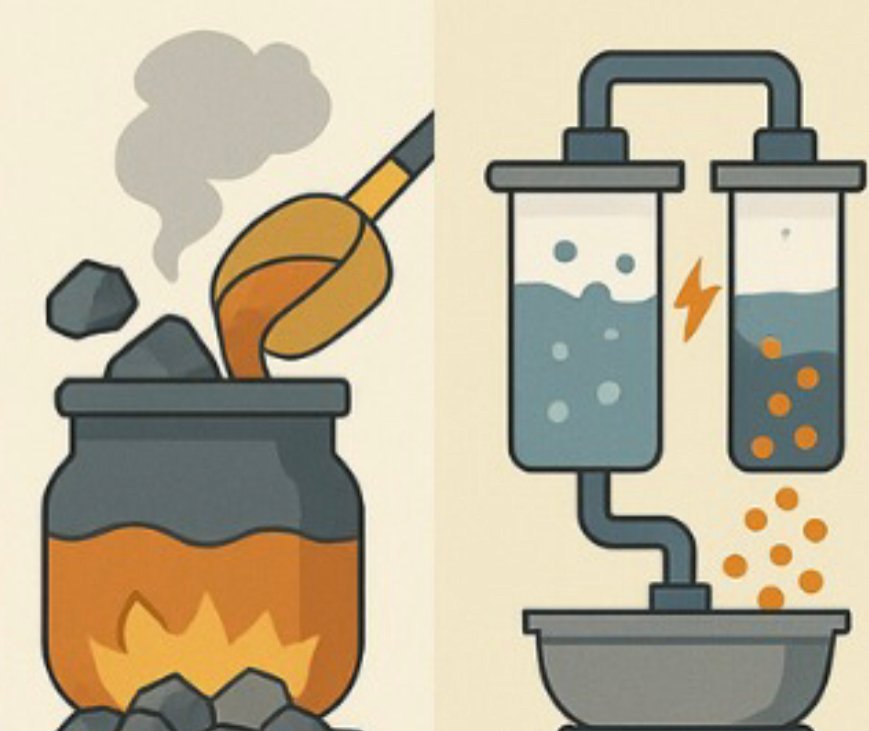
Smelting is the metallurgical process of heating concentrated ore to very high temperatures to separate metal from impurities. The concentrate is melted in furnaces, where chemical reactions reduce the ore to its metallic form.
During smelting, molten metal collects at the bottom of the furnace, while lighter impurities float to the top as slag. This step marks the transition from mineral concentrate to a metal product suitable for further refining.
- Refining: Achieving High-Purity Metal
Refining is the final purification stage that ensures the metal meets stringent quality standards required for industrial use. Common refining methods include electrorefining, hydrometallurgical processing, and chemical purification.
The objective of refining is to remove remaining impurities and produce high-purity metal, ready for manufacturing applications such as electronics, automotive components, construction materials, and energy systems.
Conclusion
The mineral processing chain is a complex, highly engineered system that transforms raw ore into valuable, market-ready metals. Each stage—from crushing to refining—plays an essential role in ensuring efficient recovery, optimal resource utilization, and consistent product quality.
Understanding this process is fundamental not only for mining professionals but also for industries that depend on a reliable supply of high-quality minerals. As technology advances, mineral processing continues to evolve toward greater efficiency, safety, and environmental responsibility.