

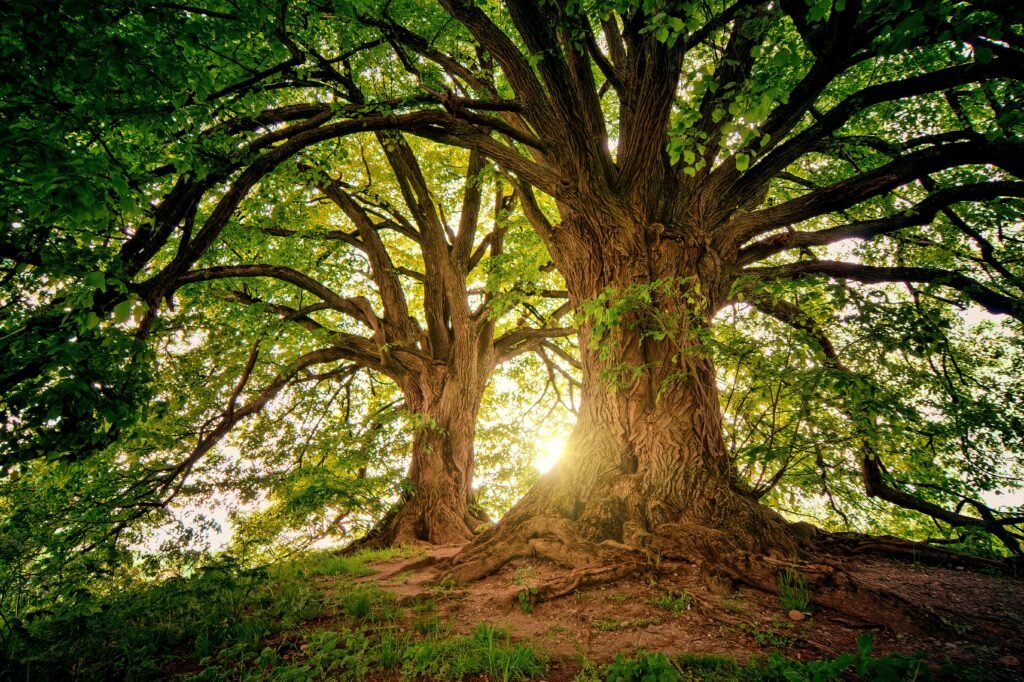
Understanding how carbon moves through our planet is essential to addressing climate change. The carbon cycle — nature’s way of recycling carbon — connects the atmosphere, land, oceans, and all living organisms. Among the most important players in this process are trees, which act as natural regulators of the Earth’s climate.
What Is Carbon and Why Does It Matter?
Carbon is one of the building blocks of life. It exists everywhere — in the air we breathe, the food we eat, and the fuel we burn.
However, when carbon accumulates in the form of carbon dioxide (CO₂) in the atmosphere, it traps heat and warms the planet. This phenomenon, known as the greenhouse effect, is a major driver of climate change.
Human activities such as deforestation, industrial emissions, and the burning of fossil fuels have significantly increased the amount of CO₂ in the air. As a result, Earth’s natural balance is being disrupted.
How the Carbon Cycle Works
The carbon cycle is a continuous process that keeps carbon circulating through different systems:
Photosynthesis: Plants absorb CO₂ from the air and convert it into oxygen and energy through photosynthesis.
Respiration: Animals and humans release CO₂ back into the atmosphere when they breathe.
Decomposition: When plants and animals die, carbon stored in their bodies returns to the soil and air.
Oceans: The oceans absorb large amounts of CO₂, acting as another major carbon reservoir.
In a balanced system, these processes keep the amount of atmospheric carbon relatively stable. However, human interference has tilted that balance.
Trees: Nature’s Carbon Sinks
Trees play a critical role in absorbing excess CO₂. During photosynthesis, they pull carbon out of the air and store it in their trunks, branches, leaves, and roots — a process called carbon sequestration.
A single mature tree can absorb roughly 22 kilograms of CO₂ each year, helping to offset emissions from vehicles, industries, and households. Forests, therefore, function as massive carbon sinks that keep the planet cooler and cleaner.
When Forests Disappear
Deforestation is one of the greatest threats to the carbon cycle.
When trees are cut down or burned, the carbon stored within them is released back into the atmosphere. This not only increases CO₂ levels but also eliminates one of the most effective tools for capturing it.
The consequences are severe: rising global temperatures, disrupted weather patterns, and increased frequency of natural disasters such as droughts and floods.
Restoring Balance: What We Can Do
Protecting and restoring forests is one of the simplest and most effective ways to fight climate change.
Here are a few steps we can take:
Plant more trees — at home, in your community, or through global initiatives.
Support reforestation projects that rebuild degraded landscapes.
Reduce consumption of single-use products and paper.
Choose sustainable products and companies that value environmental responsibility.
Every tree makes a difference. By understanding and supporting the carbon cycle, we can all play a role in protecting the systems that sustain life on Earth.