

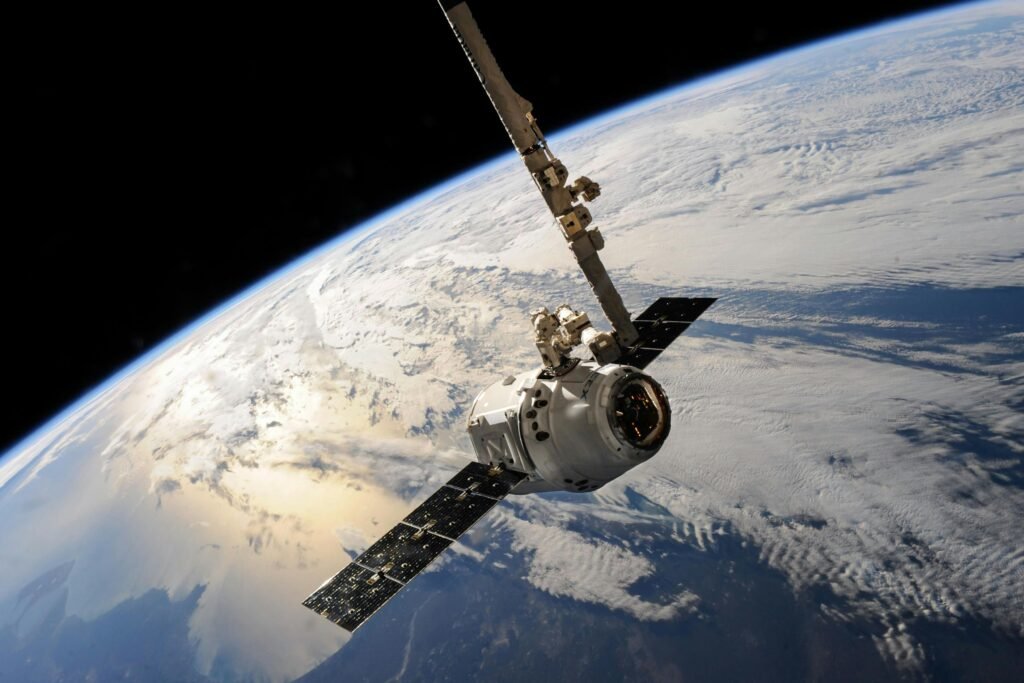
The Earth is constantly changing, yet many of these changes occur beyond the limits of human vision. While our eyes perceive only visible light, satellite sensors are designed to capture a much broader range of electromagnetic signals. Through multispectral and radar imagery, satellites enable us to observe, analyze, and understand phenomena that would otherwise remain invisible.
Beyond Natural Colors
Human vision is restricted to a narrow portion of the electromagnetic spectrum. Satellite sensors, however, extend far beyond this range by recording reflected and emitted energy across multiple wavelengths. This expanded perspective allows scientists and professionals to detect subtle variations in surface conditions that cannot be identified through natural-color observation alone.
Multispectral Imagery: Revealing Surface Characteristics
Multispectral satellite imagery captures data in several discrete spectral bands, including visible and infrared wavelengths. Each band responds differently to surface materials such as vegetation, soil, and water. By analyzing these spectral responses, multispectral imagery makes it possible to assess vegetation health, monitor water quality, and evaluate soil conditions with high reliability and consistency.
Radar Imagery: Seeing Through Clouds and Darkness
Unlike optical sensors, radar systems actively emit microwave signals toward the Earth’s surface and measure the reflected response. This capability allows radar satellites to collect data regardless of cloud cover, weather conditions, or time of day. As a result, radar imagery plays a crucial role in monitoring areas that are frequently obscured by clouds, as well as in detecting surface deformation, flooding, and landslide risks.
Making the Invisible Visible
By combining multispectral and radar data, satellite imagery transforms invisible signals into meaningful information. Changes in land cover, early signs of environmental degradation, and potential natural hazards can be identified before they become visible on the ground. This early detection supports more informed decision-making and proactive management strategies.
From Image to Insight
Satellite imagery is more than just visual representation—it is a powerful analytical tool. Through advanced processing and interpretation, raw satellite data is converted into insights that support scientific research, spatial planning, resource management, and disaster risk reduction. In this way, satellites enable us not only to observe the Earth, but to understand it at a deeper level.