

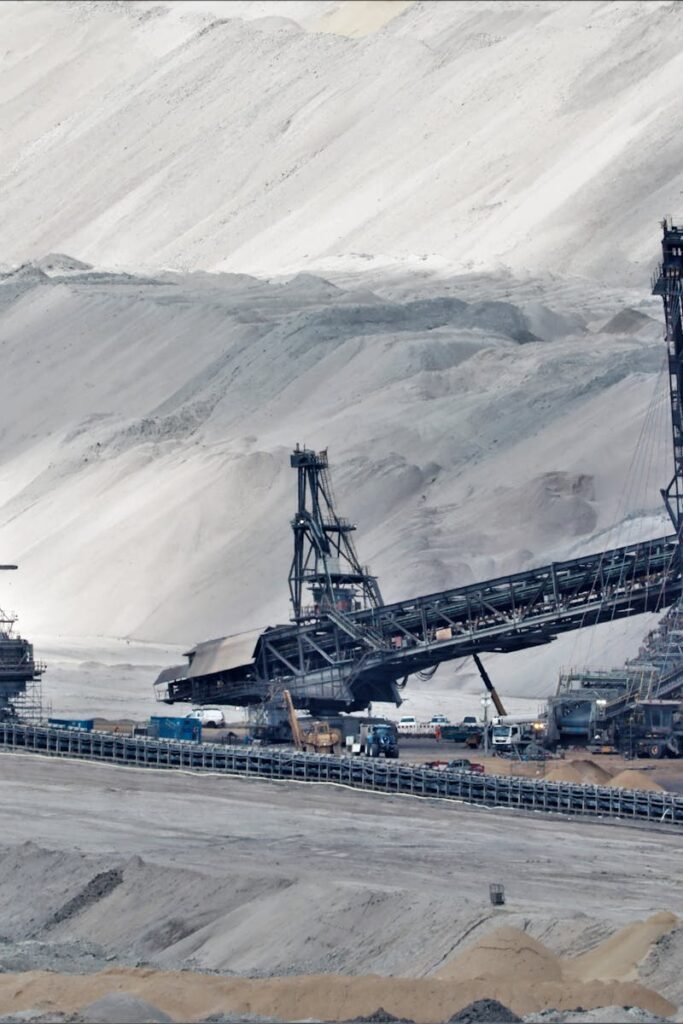
Mining is not merely an operational activity—it is a regulated industry governed by structured legal frameworks. A mining license represents more than administrative approval; it reflects compliance, accountability, and long-term responsibility toward environmental and economic sustainability.
- Regulatory Authority and Legal Structure
Mining activities operate under national regulatory systems designed to control land allocation, resource ownership, and environmental protection. Licensing frameworks define who has the legal right to explore, extract, and commercialize mineral resources.
A structured permit system ensures:
Legal certainty for investors
Clear operational boundaries
State oversight and revenue collection
Without formal authorization, extraction activities are classified as illegal and subject to sanctions. - Defined Concession Areas
Licenses are geographically specific. Authorities determine concession boundaries based on spatial planning, geological data, and land-use compatibility.
Each approved area:
Has mapped coordinates
Is recorded in national mining databases
Cannot overlap with restricted or protected zones
This spatial control prevents land conflicts and unmanaged exploitation. - Permit Classification
Mining licenses are typically divided into stages:
Exploration Phase – Geological surveys, sampling, feasibility studies.
Production Operation Phase – Extraction, processing, transportation, and sales.
Special Permits – Issued under particular regulatory or strategic conditions.
Each phase carries distinct technical and reporting obligations. - Environmental Compliance
Environmental approval is a prerequisite for licensing. Companies must conduct impact assessments, mitigation planning, and reclamation commitments before receiving operational approval.
Environmental governance ensures:
Ecosystem protection
Controlled waste management
Post-mining land rehabilitation
Responsible licensing integrates economic goals with ecological safeguards. - Technical and Financial Evaluation
Regulators assess whether applicants possess:
Technical expertise
Adequate financial capacity
Realistic mine planning
Reclamation guarantee funds
This evaluation reduces operational risk and protects public interest. - Post-Mining Responsibility
Mining licensing does not end with extraction. Companies are obligated to conduct land reclamation and, in many cases, post-mining landscape restoration.
Sustainable mining policy requires:
Environmental recovery
Long-term monitoring
Socioeconomic transition planning
A properly enforced licensing framework transforms mining from short-term extraction into structured resource management.