

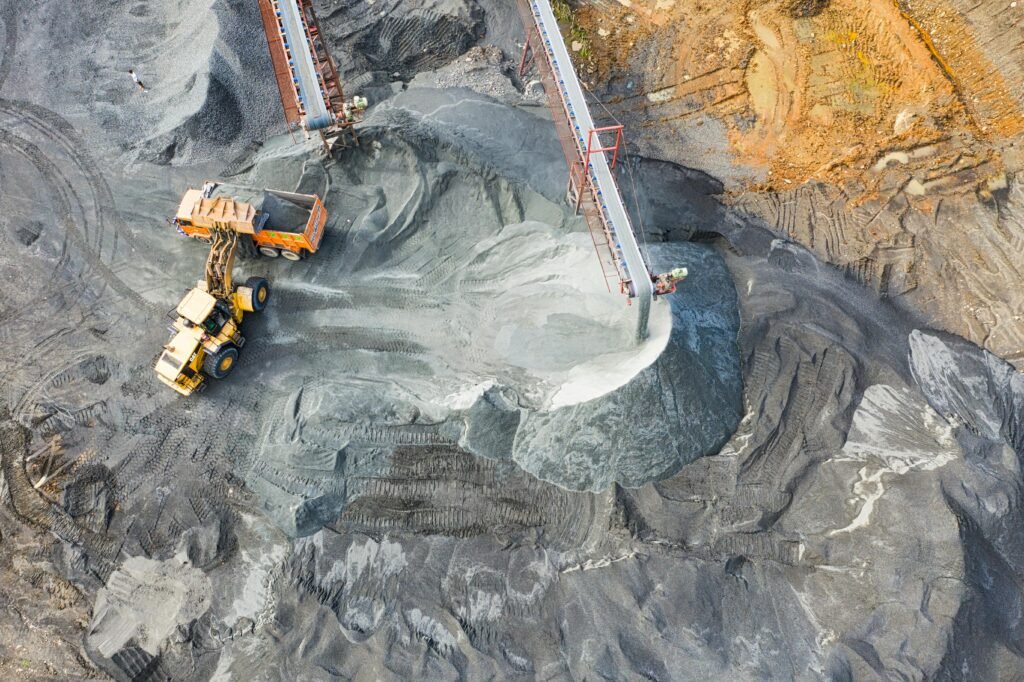
Mining is often perceived as a distant industrial activity—something that happens far away from cities and daily routines. In reality, modern life is deeply connected to what happens beneath the Earth’s surface. From infrastructure to technology, mining plays a foundational role in shaping contemporary society.
- Mining Starts Underground
Mineral resources form through geological processes that take millions of years. Heat, pressure, tectonic movement, and chemical reactions concentrate valuable elements deep within the Earth. These processes determine not only what minerals exist, but also where they can be found. Mining is therefore inseparable from geology. - Understanding the Land Before Extraction
Before any extraction begins, extensive geological mapping and exploration are required. Geologists analyze rock layers, fault lines, and mineral composition to assess economic feasibility and environmental risk. This stage is critical—poor geological understanding can lead to inefficient operations and long-term damage. - From Earth to Extraction Sites
Mining methods vary depending on depth, geology, and mineral type. Open-pit mining is commonly used for near-surface deposits, while underground mining targets deeper resources. Both methods require heavy equipment, careful planning, and strict safety standards to protect workers and surrounding communities. - Processing Raw Materials
Extracted ore is not immediately usable. It must be crushed, separated, and refined in processing facilities. This stage transforms raw rock into concentrated materials that can be used by other industries. Processing efficiency directly affects resource use, waste generation, and environmental impact. - Mining and Modern Civilization
Everyday objects—smartphones, vehicles, buildings, energy systems—are made possible by mined materials. Steel, copper, lithium, nickel, and rare earth elements form the backbone of modern infrastructure and technology. Without mining, many essential systems would simply not exist. - Responsibility Beyond Extraction
Today, mining is no longer evaluated solely by production output. Environmental management, land reclamation, and social responsibility are increasingly central to the industry. Sustainable mining aims to balance economic value with ecological protection and long-term community well-being.
Conclusion
Mining is not just an industrial process—it is a link between Earth’s natural history and human development. Understanding this connection allows for more informed discussions about sustainability, resource management, and the future of responsible extraction.