

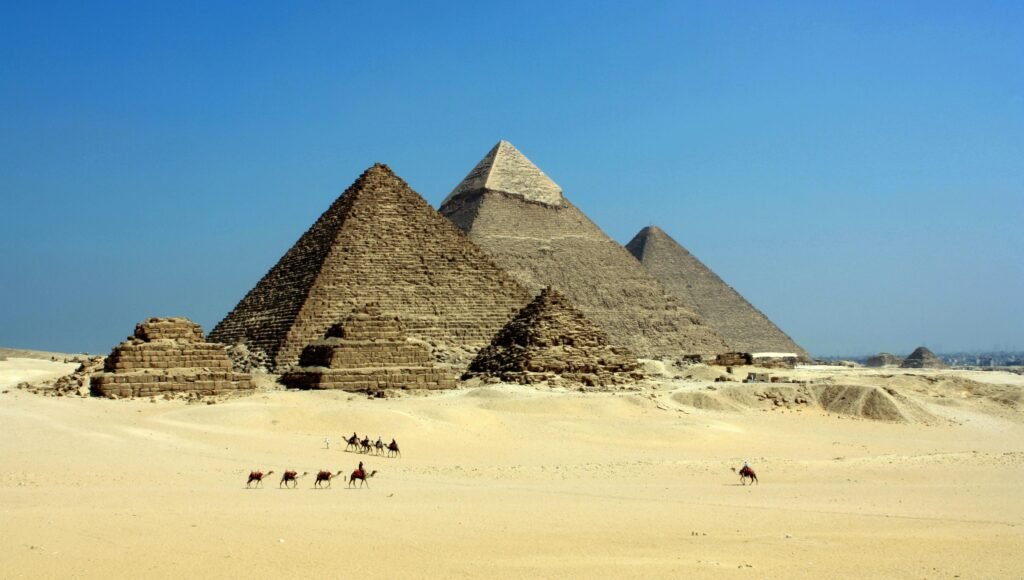
How Geography Shaped the Development of Civilizations Geography has played a crucial role in shaping the rise and success of civilizations throughout history. From fertile river valleys to strategic trade routes, geographical features have provided early human societies with the resources and advantages necessary to thrive. In this blog post, we’ll explore how different geographical locations influenced the development of ancient civilizations. 1. Ancient Egypt and the Nile River The ancient Egyptian civilization thrived along the banks of the Nile River, one of the world’s longest rivers. The Nile provided water, fertile soil, and a reliable source of irrigation for agriculture. These advantages allowed Egypt to flourish, creating one of the most iconic civilizations in history. The river’s predictable flooding pattern provided ample opportunities for farming, leading to surplus crops, which supported a growing population and enabled the development of a centralized government and complex social structures. 2. Sumer in Mesopotamia Mesopotamia, often referred to as the “Cradle of Civilization,” developed between two major rivers, the Tigris and Euphrates. This region’s fertile soil, combined with irrigation techniques, allowed the Sumerians to build advanced agricultural systems. These rivers also facilitated trade and cultural exchange, helping Sumer to become a prosperous and influential civilization. The need to manage water resources led to the creation of some of the first known forms of writing and governmental structures. 3. Rome and the Mediterranean Sea The Roman Empire’s strategic location around the Mediterranean Sea significantly contributed to its success. The sea acted as a conduit for trade, communication, and military expansion, connecting Rome to regions across Europe, Asia, and Africa. Rome’s access to vital trade routes helped in the exchange of goods, culture, and ideas. This facilitated not only economic prosperity but also the growth of Roman engineering, law, and culture. 4. China and the Yangtze River The early Chinese civilization grew along the Yangtze and Yellow Rivers, which provided fertile land for agriculture, access to water for transportation, and a stable environment for settlement. These rivers became vital to China’s agricultural success, supporting both rice and wheat farming. Furthermore, the river valleys provided key transportation routes that helped unify the vast land, enabling the development of a centralized government and fostering technological innovations like the compass and gunpowder. 5. The Incas and the Andes Mountains The Incas created an empire in the high-altitude Andes Mountains, which posed unique challenges in terms of agriculture and transportation. However, the Incas adapted by developing advanced farming techniques, such as terracing, that allowed them to cultivate crops in the steep, mountainous terrain. The Andes also acted as a natural barrier, protecting the Incan empire from external invasions and contributing to the development of a centralized government and remarkable infrastructure, including their famous road system. 6. India and the Indus River The Indus Valley Civilization emerged around the Indus River, one of the world’s oldest river systems. The river’s seasonal floods provided rich alluvial soil for agriculture, which was the backbone of the civilization. The strategic location of the Indus Valley also facilitated trade routes to the Middle East and Central Asia, allowing for cultural and economic exchanges that helped the civilization thrive. The cities of Harappa and Mohenjo-Daro were among the earliest planned cities, highlighting the importance of water management and urban planning. 7. Conclusion: The Influence of Geography on Civilizations Geography not only shaped the physical landscapes of these civilizations but also their social, economic, and cultural development. Access to water, fertile land, and trade routes allowed for the growth of agriculture, the exchange of goods and ideas, and the establishment of complex societies. The advantages provided by these geographic features were instrumental in the rise of these civilizations, demonstrating the profound connection between land and development. In conclusion, geography played an indispensable role in the development of world civilizations. It influenced where people settled, how they built their economies, and how they interacted with other cultures. Understanding these geographical factors helps us appreciate how natural landscapes shaped the course of human history.