

Understanding the Full Mining Lifecycle
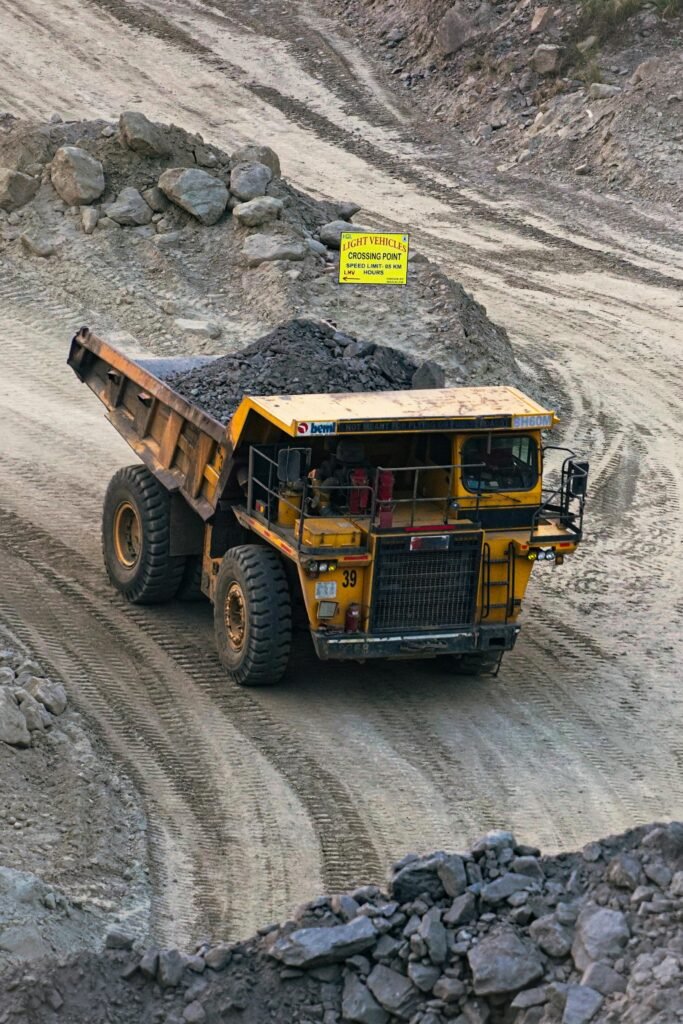
Mining is often perceived as a purely extractive activity — heavy machinery, open pits, and material removal. In reality, modern mining is a structured, data-driven process that spans far beyond excavation. It is a lifecycle built on planning, control, and long-term responsibility.
Understanding this lifecycle is essential to evaluating mining activities objectively and professionally.
- Mining Begins Long Before Excavation
Before any physical operation starts, mining projects are shaped through extensive preparatory stages. These include geological exploration, geotechnical assessments, and environmental baseline studies. At this stage, data collection is critical — not to extract resources, but to understand the characteristics and limitations of the site.
Equally important are legal and spatial permits. Mining activities must align with land-use planning, regulatory frameworks, and environmental safeguards. Most strategic decisions that determine the project’s feasibility are made before the ground is disturbed. - Operations Are About Control, Not Speed
Once mining operations begin, the focus shifts from exploration to control. Active mining is governed by strict safety procedures, production plans, and operational limits. Contrary to popular belief, efficiency in mining is not about speed, but about maintaining stability, safety, and compliance.
Every movement of material is monitored against technical parameters and regulatory standards. Operations are continuously adjusted to manage risks related to slope stability, water management, and workforce safety. - Mining Is a Data-Driven Industry
Modern mining relies heavily on data. Survey measurements, production reports, and environmental monitoring results inform daily operational decisions. Technologies such as drones, satellite imagery, and digital dashboards allow mining sites to be managed as integrated systems rather than isolated physical locations.
Data transforms mining from a reactive activity into a predictive one — enabling operators to anticipate risks, optimize production, and reduce environmental impact. - Environmental Responsibility Is Ongoing
Environmental management is not a separate phase of mining; it is embedded throughout the project lifecycle. During operations, water quality, air emissions, and land disturbance are continuously monitored to ensure compliance with environmental standards.
These measures are not optional add-ons, but core operational requirements that influence how mining activities are conducted on a daily basis. - Mining Does Not End When Extraction Stops
One of the most overlooked aspects of mining is what happens after resources are extracted. Post-mining responsibilities include land rehabilitation, recontouring, revegetation, and long-term environmental monitoring.
The success of a mining project is increasingly measured by how well the site can be stabilized and reintegrated into its surrounding environment. Closure planning is therefore not the end of mining, but a continuation of responsibility. - Mining Is a Lifecycle, Not an Event
Viewing mining solely as an extractive act oversimplifies a complex process. Mining is a lifecycle — beginning with planning and data collection, continuing through controlled operations, and extending into long-term environmental stewardship.
A professional understanding of mining requires looking beyond excavation and recognizing the systems, decisions, and responsibilities that shape every stage of the process.