

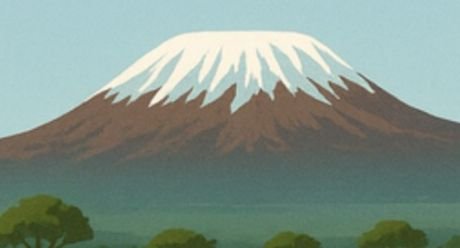
Mount Kilimanjaro has long been one of the world’s most iconic natural landmarks. Rising majestically above the plains of Tanzania, its snow-capped summit has inspired explorers, scientists, climbers, and storytellers for centuries. But today, this legendary mountain is sending us a clear and urgent message: its glaciers are rapidly disappearing.
A Natural Wonder Under Threat
Kilimanjaro’s ice cap has always been a defining symbol of the mountain. The contrast between tropical grasslands below and a gleaming snow-covered peak above is part of what makes it so unique. However, this signature feature is vanishing at an alarming rate.
Over the past century, Kilimanjaro has lost nearly 80 percent of its glacier mass. Satellite imagery, field observations, and scientific research all confirm the same sobering trend: the once-expansive ice fields are shrinking faster than ever.
Why Are Kilimanjaro’s Glaciers Melting?
Unlike many glaciers around the world that are melting due to rising surface temperatures alone, Kilimanjaro’s retreat is influenced by a combination of factors.
The primary driver is global warming. Increasing temperatures alter atmospheric moisture, reduce snowfall, and accelerate sublimation—the direct evaporation of ice into vapor. With less new snow accumulating and more ice disappearing, the mountain’s glaciers simply cannot regenerate.
Changes in regional climate patterns also play a role. Shifts in cloud cover, humidity, and wind patterns all contribute to drying conditions on the summit, making the glaciers even more vulnerable.
Consequences Beyond the Summit
The loss of Kilimanjaro’s glaciers is more than a visual change; it affects ecosystems, communities, and industries tied to the mountain.
Locally, the ice fields influence water availability and microclimates. Their disappearance contributes to increased uncertainty for farmers and wildlife that depend on stable environmental conditions.
Tourism, one of Tanzania’s major economic pillars, is also at risk. Many visitors travel to Kilimanjaro specifically to witness its snow-capped peak—an experience that may not be possible for future generations.
On a global scale, Kilimanjaro has become a symbol of climate change, reflecting the broader and accelerating impacts felt worldwide.
What Can We Do?
While the fate of Kilimanjaro’s glaciers may seem distant, the underlying cause is global—and so is the responsibility.
Reducing greenhouse gas emissions, protecting forests, adopting sustainable energy systems, and supporting conservation efforts are critical steps that can slow the pace of climate change. Awareness and individual action also matter: informed choices in consumption, energy use, and advocacy can collectively make a significant impact.
A Call to Awareness
Kilimanjaro’s vanishing ice is a powerful reminder of how interconnected our world has become. What happens on a mountaintop in Tanzania is directly linked to decisions made in homes, industries, and governments across the globe.
The question is no longer whether climate change is real, but how quickly we respond to it. Preserving the legacy of Mount Kilimanjaro—and the countless ecosystems facing similar threats—depends on the choices we make today.