

In today’s digital landscape, maps are no longer static representations of space. They have evolved into dynamic, intelligent systems capable of providing real-time location and navigation. This transformation is made possible by the Global Positioning System (GPS), a technology that integrates satellite communication, mathematical positioning, and digital mapping platforms.
This article explores the three core elements that enable GPS to function effectively: satellites, geographic coordinates, and real-time navigation systems.
Satellite Infrastructure: The Backbone of GPS
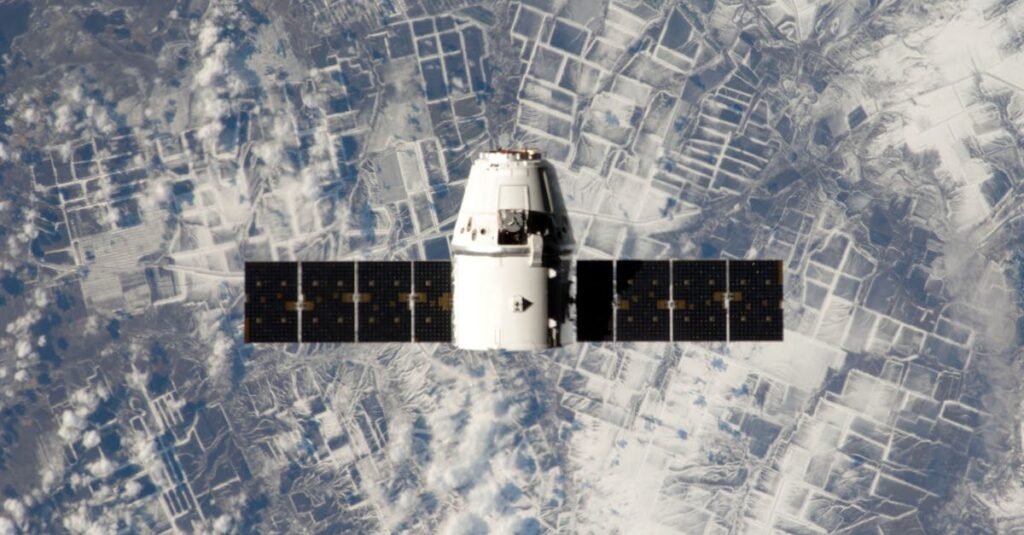
GPS operates through a constellation of satellites orbiting the Earth. These satellites continuously transmit signals that include precise timing and positional data, supported by highly accurate atomic clocks onboard each unit.
When a GPS-enabled device, such as a smartphone, is activated, it receives signals from multiple satellites simultaneously. By analyzing these signals, the device can determine its relative position on Earth.
To achieve accurate positioning, signals from at least four satellites are typically required, allowing the system to calculate not only horizontal location but also altitude.
Geographic Coordinates: Defining Location Precisely
Once satellite signals are received, the GPS system translates this information into geographic coordinates based on latitude and longitude. These coordinates provide a universal framework for identifying any point on the Earth’s surface.
The process used to determine location is known as trilateration, a method that calculates distances between the receiver and multiple satellites using signal travel time. By intersecting these distance measurements, the system pinpoints an exact position.
This step converts raw satellite data into meaningful spatial information, forming the basis of digital mapping.
Real-Time Navigation: From Position to Movement
After establishing a user’s location, GPS integrates with digital mapping platforms to enable real-time navigation. Applications such as Google Maps and Waze utilize this data to deliver route guidance and travel information.
These systems continuously update user positions, calculate optimal routes, and dynamically adjust directions based on real-time conditions such as traffic congestion or road closures.
As a result, navigation becomes not only accurate but also adaptive, allowing users to respond efficiently to changing environments.
Conclusion
GPS technology represents a sophisticated integration of space-based infrastructure and geospatial computation. Its effectiveness relies on three key components:
Satellites, which transmit essential signals
Geographic coordinates, which define precise locations
Real-time navigation systems, which convert data into actionable guidance
Together, these elements form the foundation of modern digital mapping, supporting a wide range of applications from everyday navigation to professional fields such as surveying, transportation, and environmental management.