

In Indonesia, environmental approval is not merely administrative compliance. Through AMDAL (Analisis Mengenai Dampak Lingkungan), project feasibility is evaluated from an ecological, social, and risk management perspective before execution begins.
Regulated under the authority of Kementerian Lingkungan Hidup dan Kehutanan, AMDAL functions as a preventive instrument to ensure development remains aligned with environmental sustainability principles.
- Development and Environmental Context
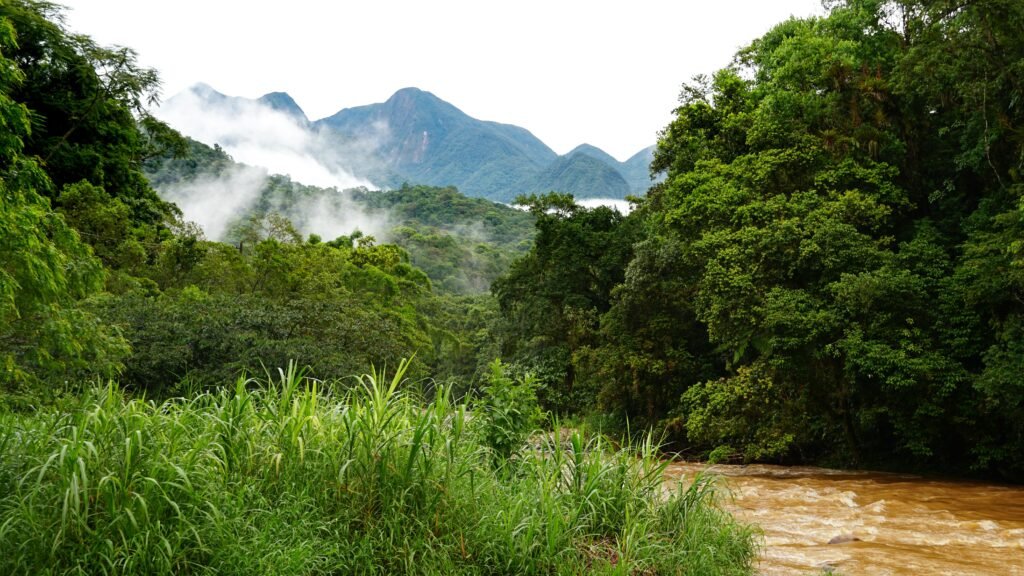
Every infrastructure, mining, or industrial project interacts with surrounding ecosystems. Forests, water bodies, biodiversity, and local communities form interconnected systems that require structured assessment prior to land clearing or construction.
Environmental feasibility is therefore assessed before financial feasibility becomes meaningful. - Scientific and Technical Assessment
AMDAL requires multidisciplinary analysis — including hydrology, air quality modeling, biodiversity assessment, and socio-economic studies.
This stage ensures potential impacts are:
Identified
Quantified
Evaluated based on significance
The objective is not to prevent development, but to manage its consequences responsibly. - Impact Zoning and Risk Identification
Projects with significant environmental impact must map risk zones clearly. Industrial emissions, waste discharge, land disturbance, and ecosystem fragmentation are analyzed to determine mitigation requirements.
This systematic identification reduces uncertainty and long-term liability. - Environmental Management and Monitoring
AMDAL documentation includes structured plans for:
Environmental Management (RKL)
Environmental Monitoring (RPL)
These frameworks transform environmental commitments into measurable actions and periodic evaluations. - Strategic Value Beyond Compliance
From a governance perspective, AMDAL strengthens:
Corporate accountability
Investor confidence
Regulatory transparency
Social acceptance
In capital-intensive sectors such as mining and infrastructure, environmental approval significantly influences project continuity and reputation.
Closing Perspective
A project cannot be considered mature solely based on capital readiness.
True readiness is demonstrated when environmental risks are understood, mitigated, and approved through formal assessment mechanisms.
AMDAL represents structured responsibility — ensuring that economic growth and ecological balance progress together, not in opposition.