

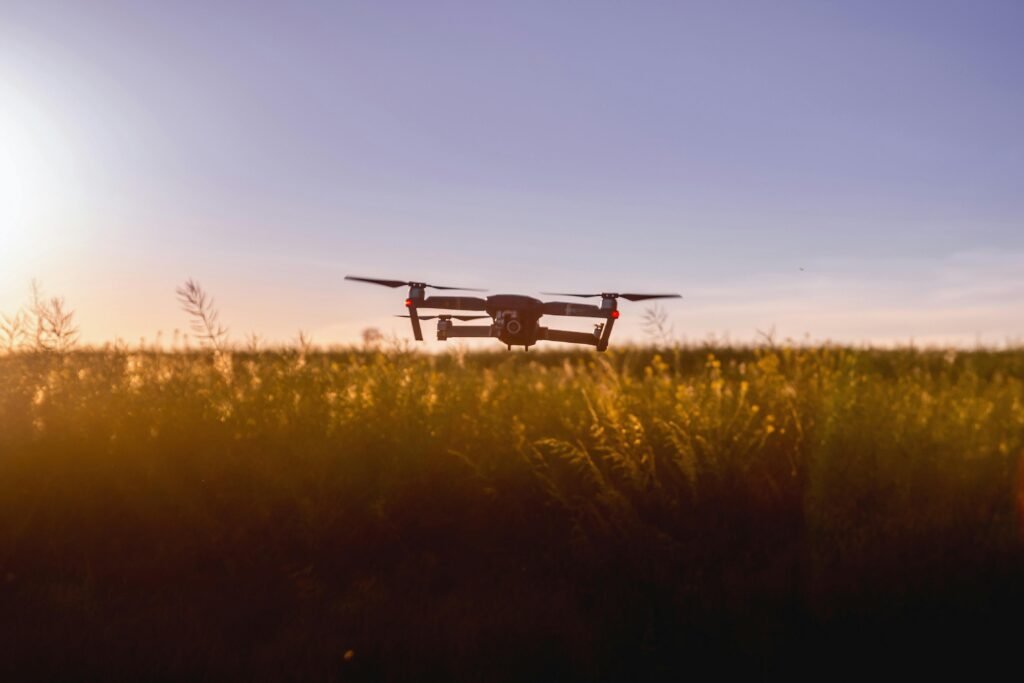
In recent years, drones have become an essential tool for monitoring landscapes, infrastructure, and environmental change. Their ability to capture high-resolution data from low altitudes offers valuable insights that are difficult to obtain through traditional surveys. However, the true value of drone data does not lie solely in its level of detail, but in its timeliness.
Landscapes Change Faster Than We Expect
Natural and human-driven processes continuously reshape the Earth’s surface. Vegetation growth, land-use conversion, construction activities, erosion, and seasonal variations can significantly alter conditions within short periods of time. Drone data captured weeks or months earlier may no longer represent the current reality on the ground.
The Risk of Relying on Outdated Data
Using outdated aerial data can lead to inaccurate interpretations and flawed decision-making. Changes may go undetected, emerging risks may be underestimated, and management actions may be based on conditions that no longer exist. In monitoring contexts, outdated data can be more misleading than having no data at all.
The Importance of Regular and Repeated Flights
Drone monitoring is most effective when flights are conducted at consistent intervals. Repeated data collection enables analysts to compare conditions over time, identify trends, and detect gradual or sudden changes. This temporal perspective transforms drone imagery from simple documentation into a powerful monitoring instrument.
Timing Matters as Much as Resolution
High-resolution imagery is often considered the main advantage of drone data. However, even the most detailed imagery loses its value if it does not reflect current conditions. In monitoring applications, timely data is often more critical than ultra-high spatial resolution.
Monitoring Requires Continuity and Consistency
Effective drone-based monitoring relies on continuity. Consistent flight parameters, standardized data processing, and regular acquisition schedules ensure that changes observed in the data are real and comparable. Monitoring is not a one-time activity, but an ongoing process that depends on timely and reliable data.
Conclusion
Drone data is most valuable when it is current. In monitoring applications, the right data collected at the right time supports accurate analysis, early detection of change, and informed decision-making. Ultimately, the strength of drone technology lies not only in seeing from above, but in capturing reality as it is—when it matters most.