

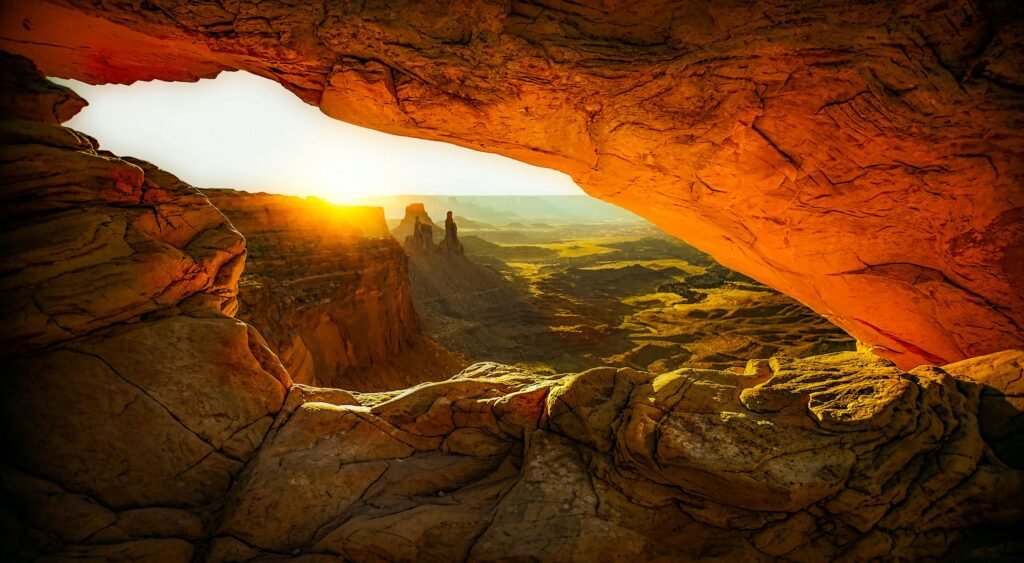
The Geology Behind Mining: Why Minerals Are Found in Specific Locations
Mining is not a random activity. The location of mineral resources is controlled by long-term geological processes that shape the Earth’s crust over millions—even billions—of years. Understanding these processes explains why certain regions are rich in minerals while others are not, and why mining activities are concentrated in specific areas.
This article explores the key geological factors that determine where mineral deposits form.
- The Earth Is Not Geologically Uniform
The Earth’s crust is highly heterogeneous. Its composition, structure, temperature, and pressure conditions vary from one region to another due to differences in geological history. These variations influence the distribution of mineral resources.
As a result, minerals are not evenly distributed across the planet. They occur only where specific geological conditions allow them to form, accumulate, and remain preserved over time. - Magmatic Processes and Mineral Formation
One of the most important mechanisms for mineral formation is magmatic activity. When molten magma rises from the mantle and begins to cool, chemical elements within it separate and crystallize at different temperatures.
Heavy and economically valuable elements—such as nickel, copper, chromium, and platinum-group metals—often concentrate during this cooling process. These minerals commonly form igneous-related deposits associated with volcanic arcs and intrusive rock bodies.
This explains why regions with a history of volcanic or magmatic activity are frequently targeted for mining. - Sedimentary Processes and Mineral Accumulation
Sedimentary processes also play a major role in creating mineral deposits. Over time, water, wind, and ice transport rock fragments and dissolved minerals from one location to another.
As these materials settle, they form sedimentary layers that may contain valuable resources such as coal, limestone, iron ore, and placer deposits of gold or tin. Rivers, deltas, and ancient seabeds are particularly important environments for this type of mineral concentration.
These deposits tend to be widespread and are often mined using surface methods. - Metamorphic Processes and Mineral Transformation
Metamorphism occurs when existing rocks are subjected to high pressure and temperature, usually deep within the Earth’s crust. Under these conditions, minerals can recrystallize, change composition, or become more concentrated.
Metamorphic processes are responsible for the formation of resources such as graphite, marble, talc, and certain gemstones. In some cases, valuable minerals become more accessible due to structural changes in the rock caused by deformation. - The Role of Tectonic Forces
Plate tectonics is a fundamental control on mineral distribution. The movement of tectonic plates creates fractures, faults, and zones of weakness in the Earth’s crust. These structures allow heat and mineral-rich fluids to move and concentrate valuable elements.
Subduction zones, rift systems, and continental collisions are especially important for forming large mineral deposits. Many of the world’s major mining regions are located along tectonic plate boundaries. - Why Mineral Zones Matter for Mining
The interaction of magmatic, sedimentary, metamorphic, and tectonic processes produces distinct mineral zones—areas where specific types of minerals are likely to occur.
Modern mining relies heavily on geological mapping and exploration to identify these zones. By understanding Earth’s geological processes, mining companies can reduce exploration risks, improve efficiency, and minimize environmental disturbance.
Conclusion
Minerals exist in specific locations because the Earth’s geological systems operate under precise physical and chemical conditions. Mining, therefore, is deeply rooted in geology, not chance.
A clear understanding of geological processes is essential for responsible resource extraction, sustainable planning, and informed public discussion about the role of mining in modern society.