

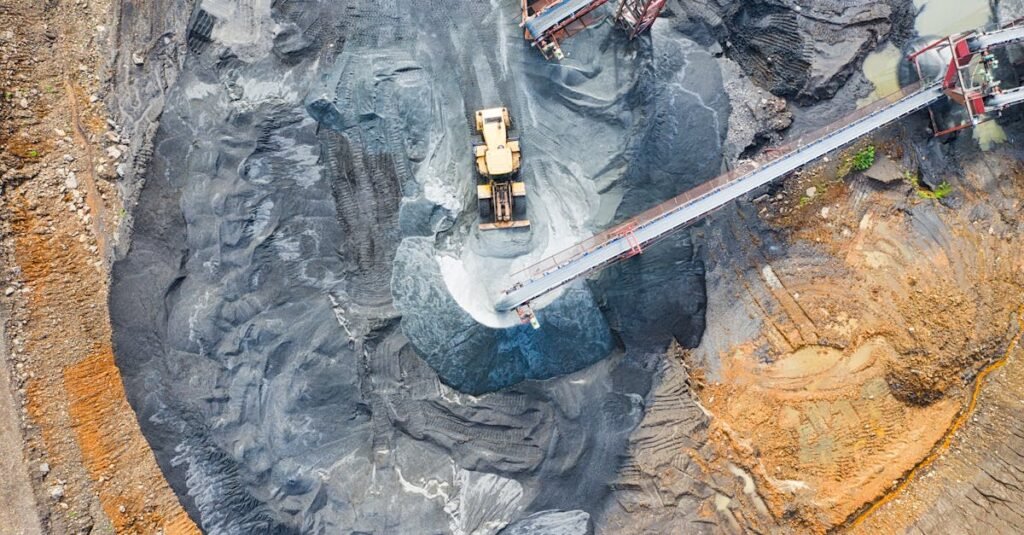
The mining industry is a multidisciplinary sector that requires expertise from various academic backgrounds. Mining operations are not only about extracting minerals but also about planning, safety, environmental management, processing, and operational efficiency. As a result, multiple university majors play a crucial role in supporting sustainable and economically viable mining activities.
This article outlines key university majors that are closely related to careers in the mining industry.
- Mining Engineering
Mining Engineering is the most directly related major to the mining industry. This field focuses on the planning, design, operation, and management of mineral extraction processes. Students learn how to extract mineral resources safely, efficiently, and economically while complying with technical and regulatory standards.
Core subjects typically include mine planning, drilling and blasting, rock mechanics, mine ventilation, and safety management. Graduates commonly pursue careers as mining engineers, mine planners, or production engineers in surface and underground mining operations.
- Geology and Geological Engineering
Geology and Geological Engineering are fundamental to the discovery and evaluation of mineral resources. These disciplines focus on understanding the Earth’s structure, rock formations, and mineralization processes that lead to the formation of economically valuable deposits.
Students study mineralogy, petrology, geological mapping, and exploration techniques. Career opportunities include geologist, exploration specialist, and resource modeler, where professionals are responsible for identifying potential mining areas and estimating mineral resources and reserves.
- Metallurgical Engineering
Metallurgical Engineering plays a key role in transforming raw mineral materials into usable metals. This discipline focuses on mineral processing and extractive metallurgy, ensuring that valuable metals can be efficiently recovered from ore.
Key areas of study include mineral beneficiation, hydrometallurgy, pyrometallurgy, and materials science. Graduates typically work as metallurgists, process engineers, or plant engineers in mineral processing plants and smelters.
- Supporting Engineering Disciplines
Several engineering majors support mining operations indirectly but are equally essential. Civil Engineering contributes to mine infrastructure such as slopes, tunnels, haul roads, and foundations. Mechanical Engineering focuses on heavy equipment, machinery maintenance, and reliability systems. Electrical Engineering manages power distribution, control systems, and automation. Industrial Engineering optimizes production systems, logistics, and operational efficiency.
Graduates from these disciplines may work as geotechnical engineers, maintenance engineers, electrical engineers, or operations analysts within mining companies.
- Environmental Engineering
Environmental Engineering has become increasingly important as the mining industry places greater emphasis on sustainability and regulatory compliance. This field focuses on minimizing environmental impacts and managing post-mining land use.
Students study environmental impact assessment, waste and water management, mine reclamation, and sustainability practices. Career paths include environmental officer, sustainability specialist, and ESG analyst, roles that ensure mining operations align with environmental and social standards.
Conclusion
The mining industry requires a wide range of academic expertise beyond Mining Engineering alone. From exploration and extraction to processing, infrastructure development, and environmental management, each discipline contributes to the overall success and sustainability of mining operations. Choosing the right university major can open diverse career opportunities and support the development of responsible and efficient mining practices.