

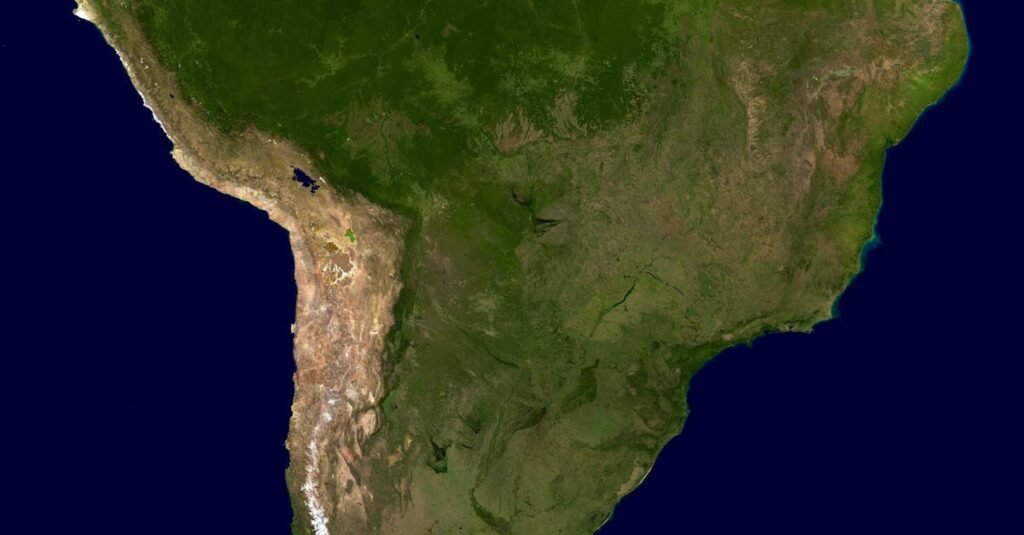
Since its launch in 1972, the Landsat Program has played a critical role in transforming how humanity understands the Earth. As one of the longest-running Earth observation initiatives, Landsat provides continuous, reliable data that supports environmental monitoring, scientific research, and policy-making worldwide.
What is Landsat?
The Landsat Program is a joint mission between NASA and the United States Geological Survey (USGS). While NASA is responsible for satellite development and launch, the USGS manages data processing, archiving, and distribution.
Over the decades, multiple Landsat satellites have been deployed, each improving imaging capabilities and expanding our ability to monitor Earth’s dynamic systems.
How Landsat Works
Landsat satellites orbit the Earth in a near-polar orbit, capturing images of the planet’s surface at regular intervals. Equipped with advanced sensors, these satellites detect reflected sunlight across multiple wavelengths, including visible and infrared bands.
This multi-spectral capability allows scientists to:
Differentiate between vegetation, water, and urban areas
Measure land surface temperature
Monitor environmental changes over time
The result is a comprehensive and consistent dataset that spans more than 50 years.
Why Landsat Matters
Landsat’s long-term data record is one of its greatest strengths. It enables researchers and decision-makers to analyze trends and patterns that would otherwise be impossible to detect.
Key contributions include:
Climate Change Monitoring: Tracking glacier retreat, sea-level rise, and temperature shifts
Disaster Management: Supporting rapid response to wildfires, floods, and droughts
Urban Planning: Observing city expansion and land-use changes
Agriculture: Assessing crop health and water usage
Real-World Applications
Across the globe, Landsat data is used in practical and impactful ways. Governments, scientists, and organizations rely on its open-access imagery for informed decision-making.
Examples include:
Mapping deforestation in tropical regions
Monitoring water resources in arid areas
Supporting sustainable land management
Assessing environmental damage after natural disasters
The Future of Landsat
With the launch of newer satellites such as Landsat 8 and Landsat 9, the program continues to evolve. These missions offer higher-quality data, improved calibration, and enhanced spectral capabilities.
As global challenges such as climate change and resource management become more complex, Landsat remains an essential tool for understanding and protecting our planet.
Conclusion
For over five decades, the Landsat Program has provided an unparalleled view of Earth’s surface. Its consistent and accessible data has not only advanced scientific knowledge but also empowered societies to make better decisions for a sustainable future.
In a rapidly changing world, Landsat continues to remind us that observing our planet is the first step toward preserving it.