

Introduction
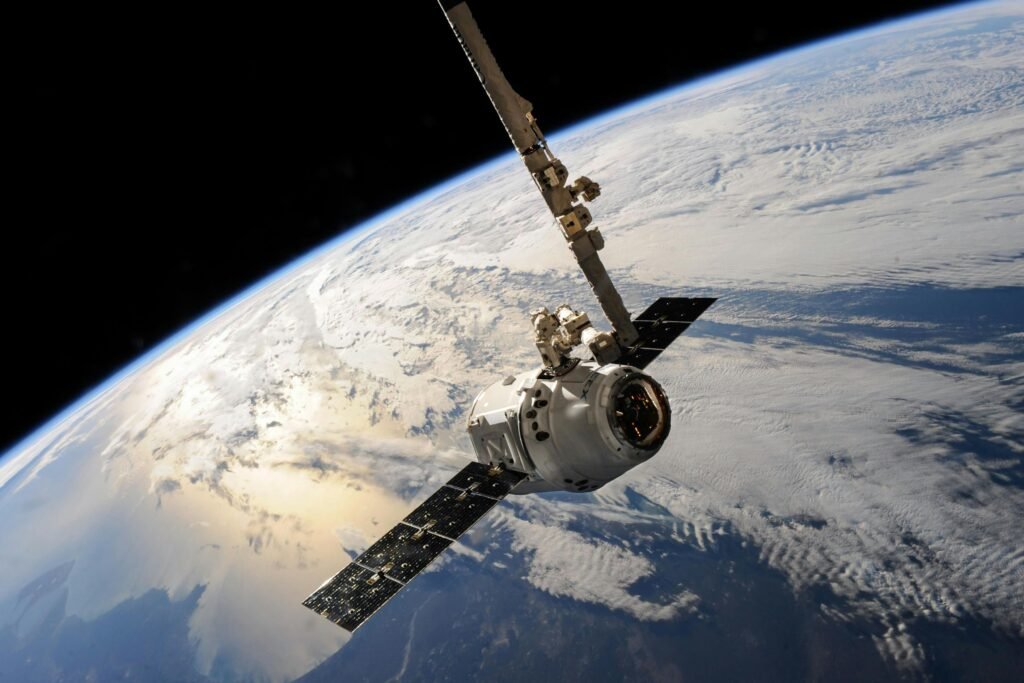
Navigation satellites play a crucial role in modern life by enabling precise positioning and real-time navigation across the globe. These systems form the backbone of technologies used in transportation, logistics, mapping, and emergency response. At the core of this capability is the Global Positioning System (GPS), a network of satellites that continuously transmit signals to Earth.
Global Navigation Satellite Systems (GNSS)
Navigation satellites operate within broader systems known as Global Navigation Satellite Systems (GNSS). These include GPS (United States), GLONASS (Russia), Galileo (European Union), and BeiDou (China). Together, they provide worldwide coverage, ensuring that users can determine their position anywhere on Earth, at any time.
Understanding Geographic Coordinates
The foundation of satellite navigation lies in geographic coordinates. Every location on Earth is defined by:
Latitude, which measures position north or south of the equator
Longitude, which measures position east or west of the Prime Meridian
By combining these two values, any point on the planet can be accurately identified.
How GPS Determines Location
GPS determines location through a process called trilateration. A GPS receiver—such as a smartphone—receives signals from multiple satellites orbiting the Earth. Each signal contains information about the satellite’s position and the time it was transmitted.
By calculating the distance from at least four satellites, the receiver determines its exact position in three-dimensional space (latitude, longitude, and altitude). This process happens almost instantly, enabling real-time navigation.
Applications in Everyday Life
Navigation satellites are deeply integrated into daily activities and critical industries:
Digital mapping and navigation apps provide directions and route optimization
Transportation systems rely on GPS for air, sea, and land navigation
Logistics and supply chains use satellite tracking for efficient delivery
Emergency services depend on accurate location data for rapid response
Importance and Future Outlook
The importance of navigation satellites continues to grow as global systems become more interconnected. From autonomous vehicles to smart cities, GPS and other GNSS technologies are shaping the future of mobility, safety, and infrastructure.
As satellite technology advances, improvements in accuracy, reliability, and coverage will further enhance the way humans navigate and interact with the world.