

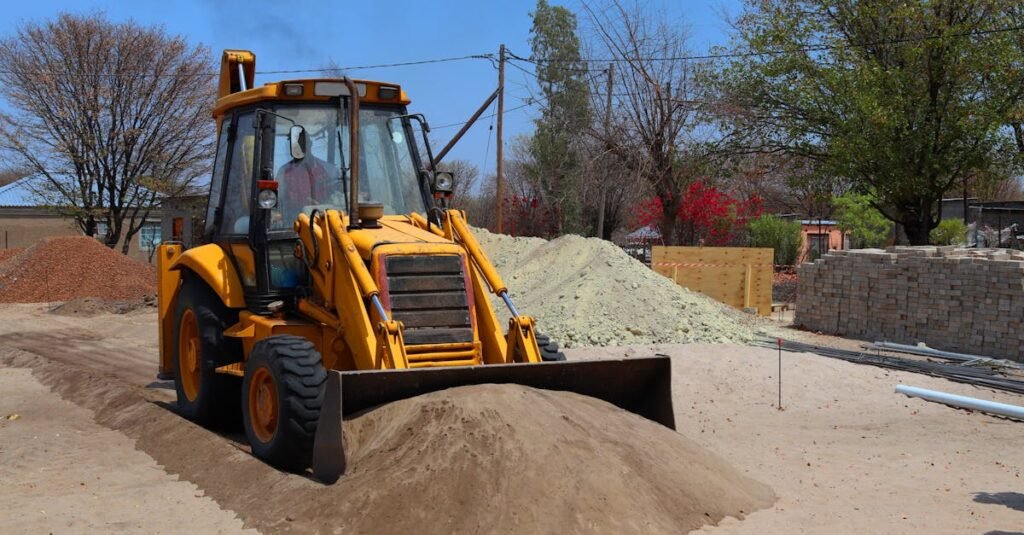
Introduction
In modern mining operations, efficiency and productivity are heavily dependent on the use of advanced heavy equipment. Among these, the excavator stands out as one of the most essential machines. Its ability to perform multiple tasks with precision and power makes it a cornerstone of both surface and large-scale mining activities.
What is an Excavator?
An excavator is a heavy-duty machine designed for digging, lifting, and moving large volumes of material. Commonly used in construction and mining industries, excavators are particularly valuable in mining due to their capacity to handle tough terrain and high workloads.
Main Components of an Excavator
An excavator consists of several key components that work together to perform its functions effectively:
Boom: The upper arm that provides reach and height
Arm (Stick): Connects the boom to the bucket and controls digging depth
Bucket: The attachment used for digging and scooping materials
Cabin: The operator’s control center
Tracks (or wheels): Provide mobility and stability on uneven terrain
Each component plays a crucial role in ensuring operational efficiency and precision.
Functions of Excavators in Mining
Excavators are widely used across various stages of mining operations. Their primary functions include:
Removing overburden: Stripping away soil and rock layers to expose valuable minerals
Loading materials: Transferring extracted materials into dump trucks for transport
Site preparation: Shaping and leveling the mining area to ensure safe and efficient operations
These functions make excavators indispensable in both the preparation and production phases of mining.
How Excavators Work
Excavators operate using a hydraulic system, which enables powerful and precise movement. Hydraulic cylinders control the motion of the boom, arm, and bucket, allowing operators to perform complex tasks with accuracy. This system ensures that even heavy materials can be handled efficiently while maintaining control and safety.
Importance in Mining Operations
The role of excavators in mining cannot be overstated. Without them, processes such as excavation, material handling, and site preparation would be significantly slower and less efficient. Their versatility, combined with their strength, allows mining companies to optimize productivity while reducing operational time and labor costs.
Conclusion
Excavators are more than just heavy machinery; they are fundamental to the success of modern mining operations. By enabling efficient excavation, material handling, and site development, they serve as the backbone of the industry. As mining technology continues to evolve, excavators will remain a critical component in achieving operational excellence.