

Drone technology has evolved rapidly, becoming an essential tool across various industries such as agriculture, mining, mapping, and surveillance. However, drones are not designed as a one-size-fits-all solution. Different types of drones are engineered to meet specific operational requirements, each offering unique capabilities and advantages.
Understanding the main categories of drones is crucial in selecting the right system for a particular task. This article explores three primary types: multirotor, fixed-wing, and hybrid VTOL drones.
Multirotor Drones
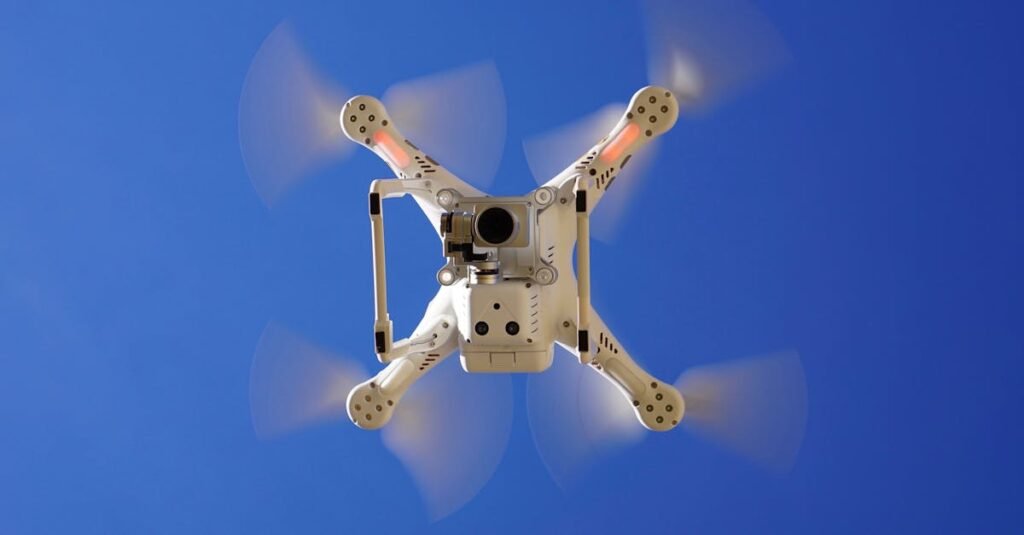
Multirotor drones are the most widely recognized and commonly used type. They are equipped with multiple rotors—typically four (quadcopter), six (hexacopter), or eight (octocopter)—which provide excellent stability and control.
These drones are especially suitable for tasks that require precision and hovering capability. Common applications include aerial photography, videography, infrastructure inspection, and short-range surveillance.
Despite their ease of use and maneuverability, multirotor drones have limitations. Their flight time is relatively short due to high energy consumption, and they are less efficient when covering large areas.
Fixed-Wing Drones
Fixed-wing drones operate similarly to traditional airplanes, relying on wings to generate lift rather than multiple rotors. This design allows them to travel longer distances with greater energy efficiency.
They are highly effective for large-scale operations such as topographic mapping, agricultural monitoring, and environmental surveys. Fixed-wing drones can cover extensive areas in a single flight, making them ideal for projects that demand wide coverage.
However, they require a runway or launching system for takeoff and landing, and they lack the ability to hover in a fixed position, which can limit their use in certain applications.
Hybrid VTOL Drones
Hybrid VTOL (Vertical Take-Off and Landing) drones combine the strengths of both multirotor and fixed-wing systems. They are capable of vertical takeoff and landing like multirotor drones, while also transitioning into efficient forward flight like fixed-wing aircraft.
This hybrid capability makes them highly versatile. They can operate in confined or remote areas without the need for a runway, while still achieving long flight times and extended coverage.
Hybrid VTOL drones are increasingly used in industries such as mapping, mining, and logistics, where both flexibility and efficiency are required.
Conclusion
Each type of drone offers distinct advantages and limitations. Multirotor drones excel in stability and precision, fixed-wing drones provide efficiency for large-area coverage, and hybrid VTOL drones offer a balance between flexibility and performance.
Selecting the appropriate drone depends on the specific mission requirements, including flight duration, area coverage, and environmental conditions. As drone technology continues to advance, these systems will play an even greater role in improving operational efficiency across industries.