

Observing Our Planet from Above
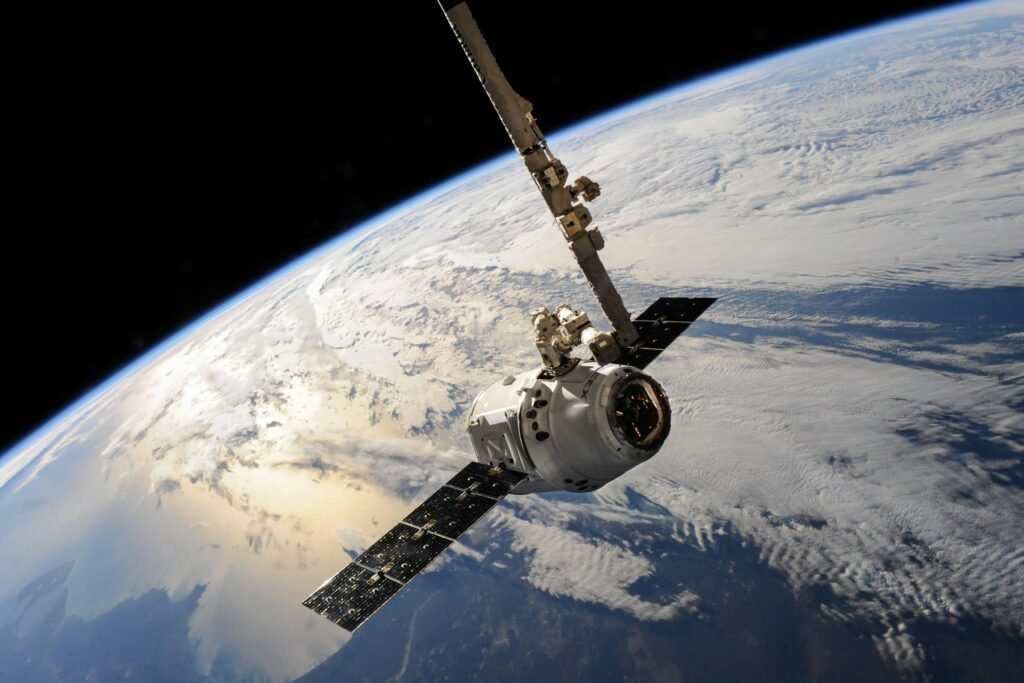
In an era where data drives decisions, satellite imagery has become one of the most powerful tools for understanding our planet. Orbiting hundreds of kilometers above Earth, satellites act as our eyes in space—continuously observing, recording, and revealing patterns that are impossible to see from the ground.
Satellite imagery is not just about capturing beautiful pictures of Earth. It is about providing a comprehensive, consistent, and objective view of the planet we live on.
Seeing Earth as a Connected System
From land and oceans to clouds and ice caps, satellites observe Earth as one integrated system. Unlike ground-based observations that are limited by location and accessibility, satellites provide a global perspective. This allows scientists, planners, and decision-makers to understand how natural and human systems interact across regions and even continents.
By observing Earth from above, satellite imagery helps reveal connections between forests and climate, oceans and weather, cities and their surrounding environments.
Consistent Observation Over Time
One of the greatest strengths of satellite imagery is consistency. Satellites revisit the same locations repeatedly—daily, weekly, or monthly—depending on the mission. This regular observation makes it possible to track changes over time with accuracy and reliability.
Whether monitoring deforestation, urban expansion, coastline shifts, or agricultural cycles, satellite data allows us to move beyond snapshots and toward long-term understanding.
Why Satellite Imagery Matters
Satellite imagery plays a critical role in many fields, including:
Environmental monitoring, such as tracking forest cover, water quality, and climate indicators
Resource management, supporting sustainable use of land, water, and minerals
Disaster response, enabling rapid assessment of floods, fires, earthquakes, and storms
Spatial planning, providing data-driven insights for infrastructure and development
In each case, decisions are strengthened by having accurate, up-to-date, and spatially consistent information.
From Observation to Insight
To understand Earth, we must first observe it. Satellite imagery transforms observation into insight by turning raw data into meaningful information. When combined with geographic analysis and local knowledge, satellite data becomes a foundation for responsible planning and sustainable decision-making.
As challenges such as climate change, resource pressure, and urban growth continue to intensify, satellites will remain essential tools for seeing our planet clearly, completely, and consistently.