

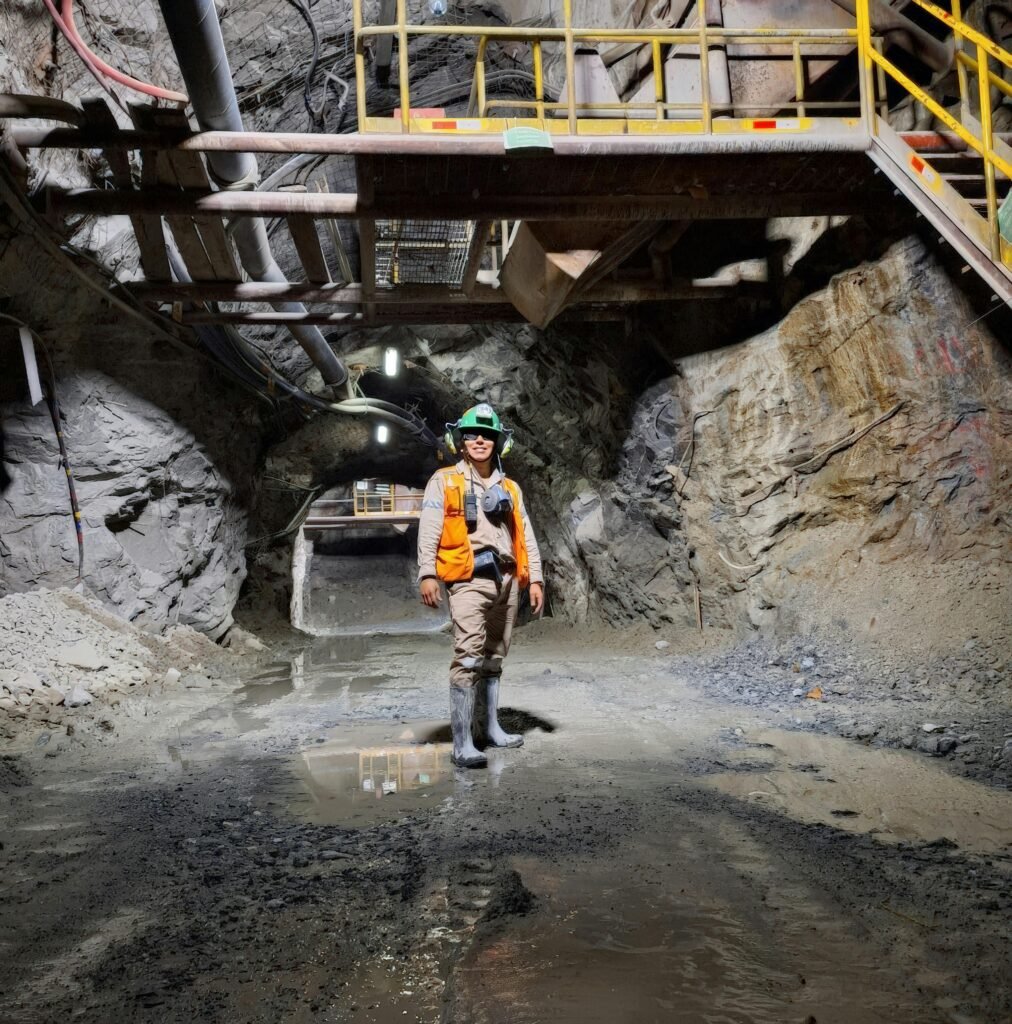
Mining remains one of the most technically demanding industries in the modern world. Among all global mining operations, the Mponeng Gold Mine in South Africa stands out as the deepest mine ever constructed and operated by humans. Reaching depths of approximately 4 kilometers below the Earth’s surface, it serves as a benchmark for advanced engineering, extreme-environment operations, and high-level safety management.
This article explores the mine’s location, geological characteristics, operational environment, and the engineering challenges that define Mponeng as one of the most complex mining sites on the planet.
- Geographic Location and Geological Importance
Mponeng is located near Johannesburg, South Africa, within the historic Witwatersrand Basin—one of the richest gold-bearing regions in the world. The basin has contributed significantly to global gold production for more than a century, and Mponeng continues this legacy as one of its most productive assets.
The mine’s strategic position in this well-known geological formation underscores its global economic relevance.
- Depth and Structural Complexity
With an operational depth of around 4.0 kilometers, Mponeng holds the record as the deepest mine in existence. At such depths, the mine enters zones characterized by intense pressure and geologic stress, making conventional mining practices insufficient.
Vertical transport systems, multi-stage lifts, reinforced shafts, and sophisticated access routes are engineered to withstand extreme subsurface conditions while ensuring continuous movement of personnel and materials.
- Operating in an Extreme Environment
Conditions within the mine become increasingly severe with depth. Key operational challenges include:
High rock temperatures, reaching up to 60°C.
These temperatures exceed safe limits for human activity, requiring large-scale refrigeration plants and high-capacity cooling systems to regulate airflow and maintain workable temperatures.
Significant geological pressure.
The deeper the excavation, the greater the risk of seismic activity and rock bursts, necessitating constant structural monitoring and reinforced support systems.
Restricted natural ventilation.
Artificial airflow systems are essential to ensure sufficient oxygen distribution and to expel heat and humidity from the deep underground environment.
Such challenges require advanced safety protocols, continuous monitoring, and a well-coordinated risk-management framework to protect workers and maintain operational productivity.
- Resource Extraction: High-Grade Gold
Mponeng is widely recognized for producing exceptionally high-grade gold. Mineralization typically occurs within quartz veins embedded in ancient rock formations.
The extraction process involves precision drilling, controlled blasting, and mechanically assisted ore transport. Modern processing facilities ensure that ore is crushed, milled, and refined efficiently to separate gold from surrounding materials.
Despite high operational costs, the richness of the ore makes the mine economically viable.
- Operational Challenges and Notable Facts
Several remarkable characteristics define the uniqueness of Mponeng:
Minor seismic vibrations are frequently detected due to natural geological movement.
Travel time to the lowest working levels can exceed one hour, reflecting the sheer scale of the operation.
It is considered one of the hottest and most technically challenging mining environments ever managed by humans.
These conditions underscore the mine’s reliance on cutting-edge technology, rigorous safety procedures, and a highly trained workforce.
Conclusion
Mponeng Gold Mine represents a pinnacle of engineering achievement and an extraordinary example of human capability in confronting and managing extreme natural conditions. Its depth, operational environment, and technological requirements make it one of the most advanced mining projects in the world.
As a producer of high-grade gold and a symbol of innovation in deep-level mining, Mponeng continues to play a significant role in the global mining industry and in the broader understanding of subsurface engineering.